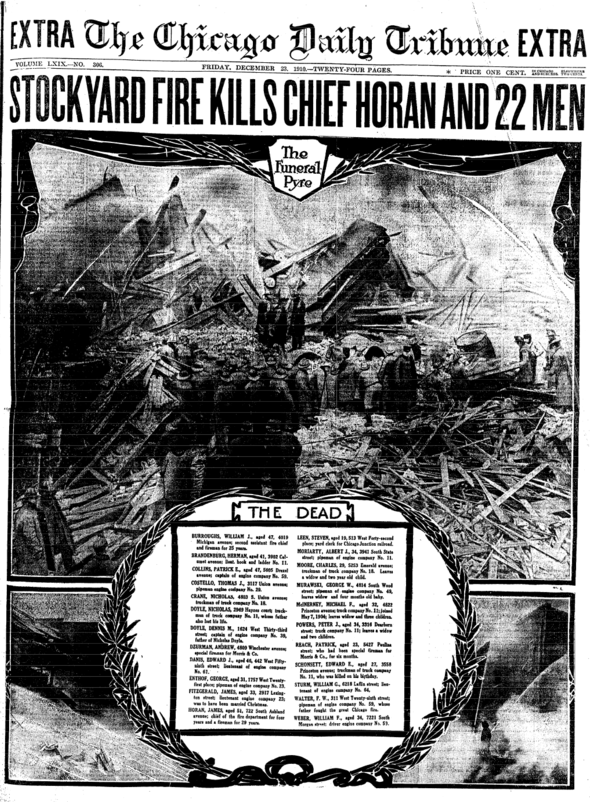
What we can clock
- A watchman found fire in the basement hide room at Beef Plant No. 7.
- Chief James J. Horan arrived and took command.
- The east wall came out. The wooden loading canopy went under. No finer minute is written here.
Ground and water
Companies reached the plant and could not get close. Freight cars along the siding blocked the approach. Crews dragged hose a long way to hydrants that still worked. City hydrants had been turned down so they would not freeze. Pressure failed. Neighborhoods adjoining the yards ran short of water.
That same morning, hours before the hide room caught, Horan had asked the City Council for high-pressure mains through the Stock Yards. The Council adjourned without acting. This file names no statute. The ask and the adjournment are the record.
The canopy
With Second Assistant Fire Marshal William J. Burroughs, Horan set lines at the east entrance under a wooden loading canopy. Other firefighters climbed the canopy roof to throw streams into the upper windows. Railroad tracks sat against the building. The platform was the only staging left.
Lieutenant Joseph Mackey, on the canopy, saw the exterior brick bow outward. He gave warning and leaped. Ten to twelve men jumped with him and lived. Those stationed beneath the canopy had no road out. Six stories of masonry fell with a roar and buried Horan and twenty of his men under brick and burning timber.
Horan was killed at once, age fifty-one. Twenty-one Chicago firefighters and three packinghouse workers died in the collapse. Fifteen other firefighters were badly hurt. The names of the twenty-one, as the CFD Foundation December LODD list gives them, sit on the Fallen 21 working roll.
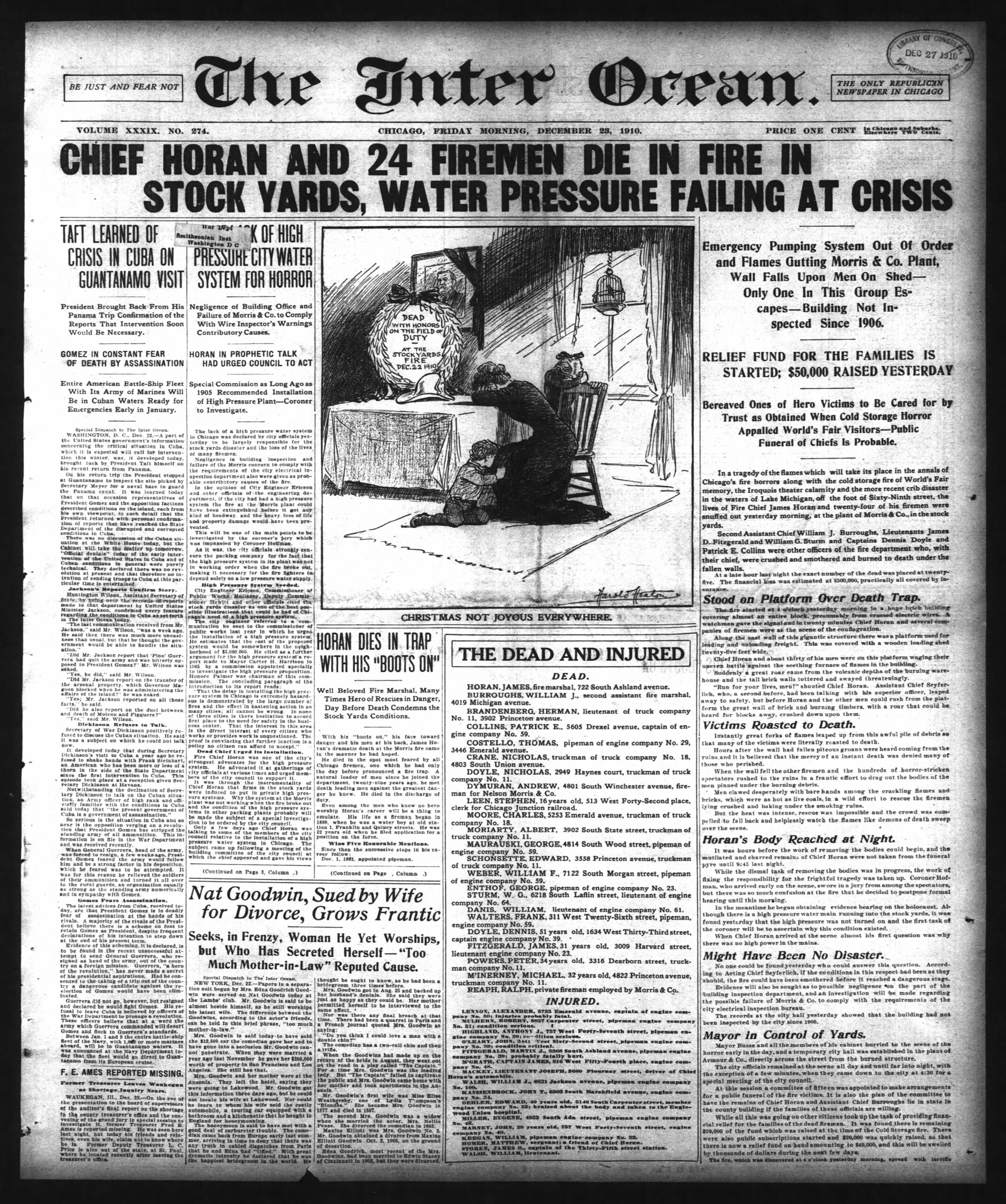
Aftermath
Command passed to First Assistant Charles Seyferlich while the fire ran through the night. Late that evening an ammonia tank explosion blew the roof off Warehouse No. 6. Mayor Fred Busse stayed in the wreckage for hours. When flying masonry came down around him, Seyferlich got the mayor clear.
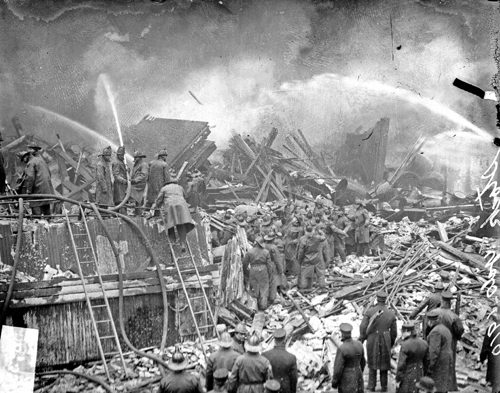
Railroad wrecking derricks and steam shovels worked the pile. Horan’s body was among the last recovered, after about seventeen hours. CFD historian Bill Cattorini, speaking to CBS Chicago in 2010, said the chief was found on his knees, arms folded, facing the ruins. Property damage was reported above $1,250,000.
The city went into mourning. Busse called an emergency Council and named fifteen aldermen to honors and family relief. The funeral and the burial at Calvary belong on Horan’s record. A public fund later raised $211,000 for the widows and children; when trustees tried to pay only interest, the widows sued and won the principal.